My Cooking: Restaurant Game
- 4.7
- Rating
- 50.00M
- Installs
- Free
- Price

 Analysis by App-foxy
I first understood the appeal of My Cooking: Restaurant Game after a short session that turned a simple order into a small chain of decisions. A customer appears, I prepare the requested food, serve it before patience runs out, collect the reward, and immediately face another order with slightly more pressure. That rhythm is the real attraction here. It is not a slow restaurant simulator where I spend most of my time arranging furniture or studying menus; it is an arcade cooking game built around quick reactions and constant movement.
The game comes from gameone and is free to start, which makes it easy to try during a commute, a break, or a few spare minutes at home. It belongs to the arcade category, carries an Everyone age rating, and has reached over 50 million installs. Those figures suggest broad appeal, but they do not tell me whether the moment-to-moment play is enjoyable. After spending time with it, my view is that it works best when I want a focused burst of activity rather than a deep culinary management experience.
How the cooking loop turns one order into another
I look at each order as part of a moving queue, not a separate task: the choices I make now can either clear space for the next request or leave me juggling more than I need to. That makes a quick scan of what is ready and what is waiting surprisingly useful. From there, the next question is how the game’s feedback helps me judge whether that sequence is working.
You May Also Like

 Blood Strike: 2.5 Anniversary
Blood Strike’s Loadouts Turn Every Drop Into a Tactical Gamble
A close look at Blood Strike’s custom loadouts: how fast access to signature weapons reshapes its battle royale rhythm, rewards preparation, and narrows the gap between fights.

 Pandora - Music & Podcasts
Pandora’s Music Is Easy to Start, but Harder to Recover
Pandora’s strength is its low-effort path from a seed to a station. Its weak spot is how much confidence it asks you to place in connection, setup, and quiet recovery.

 8 Ball Pool
 Is Built on Rivalries, Rematches, and Routine
A close look at the rivalries, rematches, shared routines, and unanswered safety questions that turn a quick pool match into a persistent mobile community.

 Samsung Music
’s Quiet Strength Is Playing What You Already Own
Its reach comes less from spectacle than from dependable access to a personal library. That simplicity is both the app’s strongest retention engine and its ceiling.

 AccuWeather: Weather Radar
AccuWeather Review: A Quick, Clear Forecast for Everyday Decisions
For everyday plans, the best forecast is the one you can understand quickly. AccuWeather makes rain timing, radar, and local conditions easy to act on, with a few trade-offs.

 Hill Climb Racing
Why Hill Climb Racing Still Turns Crashes Into One More Run
A tiny car, a bumpy hill and one more upgrade: Hill Climb Racing keeps resurfacing because its simple chaos makes every near-miss feel personal.
More From Our News Desk



The first action is simple, but timing quickly matters
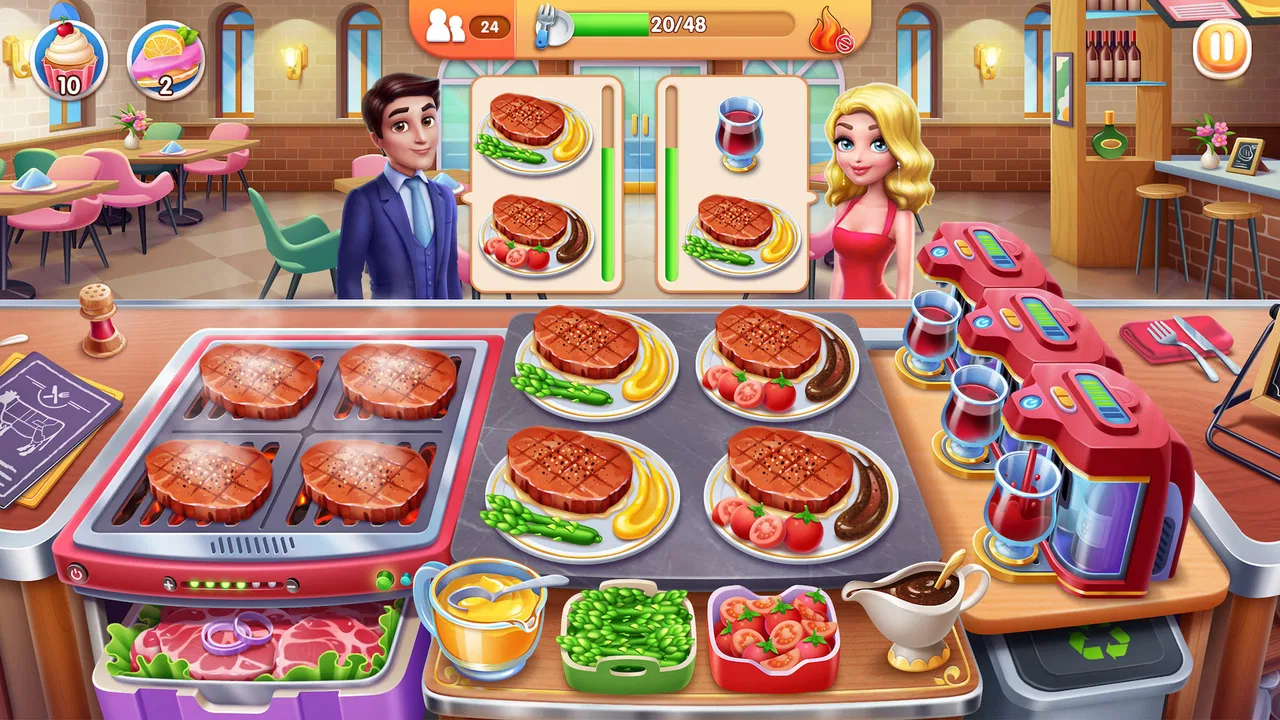
The opening interaction is easy to understand: I look at the customer’s request, choose the needed preparation steps, and serve the completed dish. The controls are approachable enough for casual players, and the game does not ask me to learn a complicated control scheme before I can begin. That accessibility is important because the challenge comes from handling several actions in the right order, not from figuring out obscure buttons.
What makes the first action interesting is that cooking is treated as a sequence rather than a single tap. I have to pay attention to what is currently being prepared, what needs to be served next, and which task will create the most delay if I ignore it. Even when the recipe itself is familiar, the pressure of multiple requests changes the way I approach it. I am constantly deciding whether to finish the current dish, start another preparation, or serve something that is already ready.
This is where the arcade identity becomes clear. The game is not asking me to recreate real kitchen work with realistic measurements or detailed ingredient handling. Instead, it turns restaurant service into a compact action puzzle. Each order is a prompt, every preparation step is a response, and the screen gradually becomes more demanding as requests compete for my attention. The best moments come when I establish a quick rhythm instead of reacting to every customer in a hurried, random way.
I found it useful to scan the whole kitchen before committing to the next tap. A player who focuses only on the customer at the front can miss a prepared item, overlook another waiting request, or waste time repeating an action that could have been handled earlier. That small habit—looking for the next two actions rather than only the current one—makes the game feel more controlled and is one of the first practical improvements a new player can make.
Feedback gives every successful action a purpose
The feedback rhythm is immediate. A completed dish changes the situation, a served order clears space for the next request, and the reward tells me that the sequence worked. When I make a mistake or allow the kitchen to become disorganized, the effect is equally understandable: progress feels slower, and the next order becomes harder to manage. I never felt that the basic loop was difficult to read.
That clear feedback is what keeps the game from feeling like a collection of disconnected taps. I can see the relationship between my choices and the result. Serving efficiently helps the session move forward; hesitating creates a backlog; recovering from a messy moment becomes its own small challenge. The game communicates this without requiring a long explanation, which suits the short-session design.
The pressure also creates a useful distinction between speed and efficiency. Tapping quickly is not always the best answer. If I rush into a preparation step without considering the order of requests, I can create a bottleneck and then spend the next few moments correcting it. A calmer sequence often produces a better result than frantic movement. In practice, I try to keep one task moving while preparing the action that will matter immediately afterward.
There is a satisfying change in mood when a crowded service period begins to settle. At first, several requests may compete for attention. Then I complete one, serve another, and regain control of the kitchen. That recovery is more rewarding than simply completing an easy order because it shows that the game’s feedback is not only about winning or losing. It also teaches me to recognize patterns in the workload.
For younger players, the straightforward interaction and Everyone rating make the game approachable. For adults, the same simplicity can be both a strength and a limitation. I can start playing without preparation, but players who want detailed cooking systems, realistic recipes, or a long strategic campaign may find the action too streamlined. This is a game about managing pressure through quick choices, not about learning the craft of cooking.
The reward is less about money than momentum
Rewards give each successful service a reason to continue. Completing orders creates a sense of progress, and that progress feeds directly into the desire to try another round. I do not need a complicated explanation to understand the appeal: I finish a sequence, see the result, and wonder whether I can handle the next one more cleanly.
The smart way to view the reward system is as motivation for improvement rather than a final destination. If I treat every session as a test of how quickly I can collect something, the loop can become repetitive. If I instead use the reward as evidence that my order management is improving, the same actions feel more meaningful. I begin to notice where I lost time, which requests caused trouble, and whether I was preparing the right item at the right moment.
That perspective also helps with the game’s free-to-play structure. My Cooking can be downloaded without an upfront payment, while optional in-app purchases range from $0.49 to $99.99 per item. I would approach those purchases carefully. The core appeal is the cooking loop itself, so I would first decide whether I enjoy the repeated service pattern before spending anything. Players who dislike timed arcade pressure will not solve that problem by buying extras.
For someone who enjoys collecting progress in small bursts, the reward cycle is effective. I can play until I complete a satisfying run, stop, and return later with a clear sense of what I want to improve. For a player who expects every reward to unlock a radically different style of play, the experience may feel less substantial. The game’s strongest reward is the feeling of handling a busy kitchen better than I did before.
One useful approach is to set a personal target for each session instead of playing without a limit. I might focus on serving more consistently, avoiding unnecessary actions, or recovering quickly after a mistake. This keeps the reward loop fresh because I am measuring a skill, not merely waiting for the next prize. It also prevents the game from becoming a mindless sequence of taps when my attention is already fading.
Why the next session begins so easily
The reset is one of the most important parts of the design. Once a service sequence ends, the game does not leave me with a long period of downtime. The previous pressure clears, the next opportunity appears, and I can immediately decide whether to try again. That clean restart explains why the game fits short breaks so well.
A realistic everyday use case is a ten-minute wait before an appointment. I can open the game, complete a few orders, and stop without needing to remember a complicated story or reconstruct a large strategy. The same quality works at home when I want something more active than scrolling but less demanding than a full console or role-playing game. The session has a clear beginning, a burst of decisions, and a natural point at which I can put the phone down.
The reset also makes failure easier to accept. A poor run does not feel like a permanent setback; it becomes information for the next attempt. I can identify the moment when I lost control and try a different order of actions. That retry quality is central to arcade games, and this one uses it well. The reason to begin another session is not only the reward waiting at the end, but the belief that I can make the next sequence cleaner.
Still, the same reset can expose the game’s repetitive side. Players who need a strong narrative, extensive character development, or a large world to explore may not find enough variety in repeating restaurant service. The game is easier to enjoy when I accept its structure: each attempt is a compact performance, and the pleasure comes from improving my response to familiar types of pressure.
I also would not choose it as my first recommendation for someone looking for a relaxed cooking game. The arcade pacing means that even a cheerful restaurant theme can become mentally busy. If I want to decorate a kitchen at my own speed or experiment with recipes without time pressure, a slower management or simulation game would be a better match. My Cooking is for players who like the feeling of being rushed, then rewarded for staying organized.
Where it stands beside other cooking and arcade games
Compared with a traditional restaurant-management game, this title puts more attention on immediate service. I spend less time planning a business and more time handling the order in front of me. That makes it easier to start and more suitable for short sessions, but it also means there is less room for players who enjoy long-term economic decisions, detailed customization, or a carefully developed management layer.
Compared with a very simple endless arcade game, it offers a more recognizable structure. The kitchen gives my actions context: requests arrive, dishes need attention, and successful service creates a reason to continue. It is more involving than tapping through an abstract score challenge, while remaining lighter than a full simulation. That middle ground is its clearest identity.
The game’s public response reflects that accessibility. It holds a 4.7 average from around 435 thousand ratings, with more than 5 thousand written reviews. I see those figures as evidence that the basic format connects with a large audience, not as a guarantee that every player will enjoy the pace. My own recommendation depends on whether the reader likes quick decisions and repeated attempts.
The current version is 11.2.23.5086, and the game supports Android 7.0 or later. That makes checking device compatibility worthwhile before installing, especially if the phone is older. Since it is free to start, the practical decision is straightforward: try the basic loop, notice whether the feedback feels satisfying, and only then decide whether it deserves a regular place on the device.
Small habits that make busy orders easier
My first tip is to avoid treating every customer request as an isolated problem. I look at the visible workload and identify which action is likely to take the longest. Starting that step early can prevent a later pileup. This is more useful than simply moving as fast as possible because it turns the kitchen into a sequence I can plan.
My second tip is to use short pauses strategically. A brief moment spent checking what is ready can save several rushed taps. In an arcade game, pausing mentally may feel slower, but it often improves the next few actions. I especially rely on this after serving an order, because that is the point when the screen may change and a new priority becomes visible.
My third tip is to treat a failed run as a diagnostic exercise. Instead of restarting immediately, I ask what actually caused the breakdown. Did I ignore a waiting request, start the wrong preparation, or lose track of something already completed? Naming the mistake gives the next attempt a concrete purpose and stops retries from becoming automatic.
A fourth useful trade-off is deciding when to stop. Because the next session is so easy to begin, it is tempting to continue after my attention has dropped. That usually makes the feedback feel harsher and my decisions less precise. I get more from the game when I end a session after a satisfying improvement rather than pushing until every order feels frustrating.
Who should install it, and who should skip it
I would recommend this game to players who enjoy quick restaurant challenges, visible progress, and the satisfaction of turning a chaotic order queue into a controlled sequence. It is especially suitable for people who want a free arcade game that can be played in short bursts without learning a complicated system first. The Everyone rating also makes it an approachable choice for family-friendly casual play.
I would be more cautious about recommending it to players who dislike timers, repeated service tasks, or in-app purchase options. The game’s central pleasure comes from doing similar actions with better timing and organization, so repetition is not a side detail; it is the foundation. Anyone seeking a quiet cooking sandbox, a deep business simulator, or a story-led adventure should look elsewhere.
My final judgement is positive, with a clear qualification: the loop works because every action produces an immediate response, every response leads to a reward, and every reset offers a believable reason to try again. gameone has kept the focus on accessible arcade cooking rather than overcomplicating the experience. I would install it for short, active sessions and recommend giving it an honest trial before considering any optional purchase. If the first few rounds make you want to improve your timing instead of merely finish them, this is likely to become a dependable casual game.
FAQs for My Cooking: Restaurant Game
01What is My Cooking: Restaurant Game about?
My Cooking: Restaurant Game is a time-management and cooking simulation game in which you prepare dishes, serve hungry customers, and expand your restaurant business. You move through different locations and food themes, unlock recipes and kitchen equipment, and try to complete each level’s objectives before time runs out. It is designed for casual play, but later stages require quick decisions and careful upgrades.
02Is My Cooking: Restaurant Game free to download and play?
Yes, the game can generally be downloaded and played for free, although it includes optional in-app purchases. These purchases may provide coins, boosters, extra resources, or other advantages that can speed up progress. You can enjoy the core gameplay without paying, but advancing through difficult levels may take more time if you choose not to buy premium items. Check your device’s store listing for current pricing and availability.
03Can I play My Cooking: Restaurant Game offline?
Many cooking levels can usually be played without a constant internet connection, which makes the game convenient for short sessions while traveling or when mobile data is unavailable. However, certain features may require internet access, including advertisements, cloud-related services, purchases, events, updates, and synchronization. Availability can vary by device and version, so it is best to launch the game online at least once after installing it.
04Does My Cooking: Restaurant Game contain advertisements or in-app purchases?
Yes, players should expect advertising and optional in-app purchases. Advertisements may appear between levels or can sometimes be watched voluntarily in exchange for rewards such as extra coins, boosts, or additional chances. Purchases are not mandatory, but they can make progression faster and reduce waiting or difficulty. Parents should review the game’s payment settings and enable purchase restrictions if children use the device.
05Is My Cooking: Restaurant Game suitable for children and beginners?
The game is easy to understand for beginners because its basic controls focus on tapping ingredients, cooking food, serving customers, and upgrading equipment. Nevertheless, the increasing pace, timed challenges, advertisements, and optional purchases may not suit every child. Younger players should use appropriate parental supervision, especially when the game is connected to an app-store payment method or displays promotional content.
Pros
- Simple controls make cooking tasks easy to learn.
- Many recipes and restaurant themes keep gameplay varied.
- Short levels work well for quick gaming sessions.
- Restaurant upgrades provide a clear sense of progression.
- Bright graphics and sound effects make the game appealing.
Cons
- Later levels can become difficult without careful timing.
- Energy or waiting systems may interrupt longer play sessions.
- Frequent upgrades can require significant in-game currency.
- Gameplay may feel repetitive after mastering the main mechanics.
- Some features or items may depend on optional purchases.

My Cooking: Restaurant Game
Gallery